Thursday, December 21, 2023

Hokuriku trip - Toyama: Glass Art Museum, Ikedaya Yasubei Shoten, Himihama kan-buri lunch

We spent the last day of our short 3-day trip in Toyama prefecture. Toyama is known for its mountains and particularly the Tateyama-Kurobe Alpine Route, but unfortunately we were visiting during the wrong time of year for it and didn't have a ton of time to get to that area. Instead, I shifted our focus to the other feature of Toyama - seafood!

But first, we ventured into Toyama city. We checked out of our hotel in Kanazawa in the morning, and drove about an hour to Toyama city, finding parking in one of the paid lots near Toyama Glass Art Museum. The building itself is noteworthy, but somehow I never got far away enough at the right angle to get a photo of it lol. 
We entered shortly after 09:30 and bought tickets for just the regular exhibits on the 4th and 6th floor (not the special exhibition which was on 2F and 3F while we visited). The rest of the building seems to be quite open with parts of it looking like a library and also featuring a cafe. It's quite modern and interesting looking. 

For the glass art itself, unfortunately photography was prohibited inside the 4th floor collection, but this is a photo from the outside. The theme for these pieces was "layers" and it was interesting to see how different artists used glass in different techniques to achieve such versatile pieces. The placards by each piece had English alongside the Japanese. 

The 6th floor is where the Chihuly permanent exhibition is which includes pieces that were specifically commissioned for Toyama Glass Art Museum. While photos are allowed in this area, the rules specifically requested that they not be posted on social media, so respecting that, here's just a photo from the outside that anyone, even without an admission ticket would be able to see with the chandelier pieces in the distance.
This collection is definitely small compared to what's available in Seattle, but it does have a cozier atmosphere. There are 3 (blue, red and yellow) hanging pieces at the entrance hall after some informational posters about Chihuly and his work. Further in, there is a large piece featuring blue stalagmite in wood. Following that is a low glass art ceiling in an interior hallway with his iconic nautical shapes and cherubs, oddly enough. The last two larger pieces are a Toyama float boat (wooden boat with many difficult glass orbs) and a version of Mille Fiori which is another iconic style you'd instantly recognize as Chihuly. 

Outside the Chihuly exhibition are two Finnish himmeli snow crystal pieces (one of which is made in glass to be in theme with the museum) from Eija Koski which had such wonderful movement and I loved the shadows they created as well. I hadn't heard of this type of decoration before, so I thought it was really cool.

Back on 2F, we took a look at the cafe and the small museum gift shop. This is also where you will supposedly have the best view of the interior of the museum with all the architectural elements. 

Next, we walked over to Ikedaya Yasubei Shoten. This shop came up on a few recommended lists and is a renovated "traditional" (think Edo period) medicine shop. Toyama had become a pharmaceutical center during that time period, and these were some of the types of items that would have been sold during that time. 

There's also a small display in the middle of the shop where the staff will give a demostration (or allow guests to try as well) about how some of the "pills" are made. I think they may speak a little English or can simplify the Japanese for foreigners based on the conversation with a large visiting group after us, but since we blended with a couple of other small groups of Japanese people just got the traditional Japanese briefing lol. It was about a 5 minute presentation and still quite interesting even without understanding 100% of it. 

We were a bit skeptical, especially at the cost, but decided to give one of their most popular items a try and purchased the smallest quantity. Ecchuhangotan 越中反魂丹 is supposed to be used for gastrointestinal disorders. According to their website, it's for people like "I drink a lot of alcohol / I get heartburn from oily foods / My stomach gets upset often / My stomach sometimes hurts from stress". 

We were wandering around a bit and passed by a mall/shopping street area. This Nanakoshi shop caught my husband's eye and he got one Nanatama (egg salad) and one cream cheese type.

Right next door was a Starbucks, so we stopped for a short break in there. 

With just a little more time to kill, we walked over towards Toyama Castle Park, but specially the "Amazing Toyama" display. Passed cute local manhole covers along the way. 

We didn't have time to enter the castle itself, but got a few good snaps with the frame (thanks to two other tourists who were also walking by and got a photo). 

We returned to the car and left Toyama city to head over to Himi, about 1 hour away by car. I had made reservations by phone for lunch at Himihama 2 months prior (when they were first available). Unfortunately I was a day late to get a reservation for the weekend, but thankfully our trip included this Monday, and there was still availability. If you are trying to visit during this season, I would recommend following @himihama on IG as well in case they have additional last minute openings if there is more fish available. 
As mentioned, this prefecture is known for seafood, and this particular area is especially famous for the seasonal large kan-buri or winter yellowtail. Because of the large size (over 10kg), the taste is supposed to be exceptional and Himihama focuses on this larger size during the winter when the fish are available. 

We arrived a little early for our 13:00 reservation but the staff greeted us warmly and once they figured out we didn't speak much Japanese, brought out the little course menu in English and also simplified the explanations and used a translation app for more complicated things, so we didn't have to be confused about anything. The menu is limited to course-style, even for lunch, so we didn't need to choose anything! The starters (salted squid, vinegared seaweed, tofu, pickles and bai shellfish) were already waiting on the table for us. The first course is kan-buri sashimi!

Next up, shioyaki (salt grilled) buri which was very generously sized and then buri daikon (such a big daikon chunk for me lol) which had a very nice flavor as well. 

And if that wasn't enough, the main dish is buri hotpot/shabu shabu. It comes with a konbu broth, vegetables and surprisingly thick cut raw buri. Start with the vegetables and then cook the buri to your desired doneness. Recommended was about 7 seconds, but you could try 3 seconds...or longer, or eat it raw if that was your preference!
The lunch was finished with cold himi udon (not pictured because I completely forgot) and you can pick the serving size. We were quite full by this point, so we opted for the small portion, but they will even bring more if you ask for it after. The recommended way to eat it was cold, with the ponzu dipping sauce. Alternately, you try putting it in the shabu broth and then flavoring with a little shoyu to eat it hot. This was refreshing and a great way to end the meal. 

The staff at Himihama were very attentive and welcoming to us despite not having a lot of Japanese language speaking skills. I highly recommend trying the kan-buri course here if you get a chance to visit in during the right season. Definitely make a reservation, especially if you have to travel specifically to get there and remember that payment is in cash only. 

Since we were in Himi, we also stopped by the giant ginko tree in Jonichi-ji (part of Asahiyama Jonichi Temple). It's certainly off season for this. No one else was around and the leaves were all gone! But it truly is massive, especially when you're right up next to it in person. It must be so much more imposing when it's full of color.

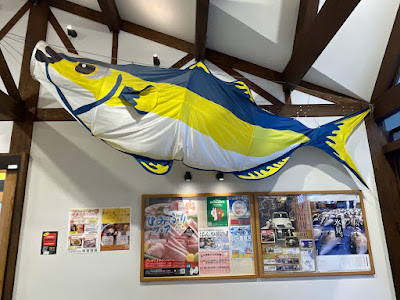
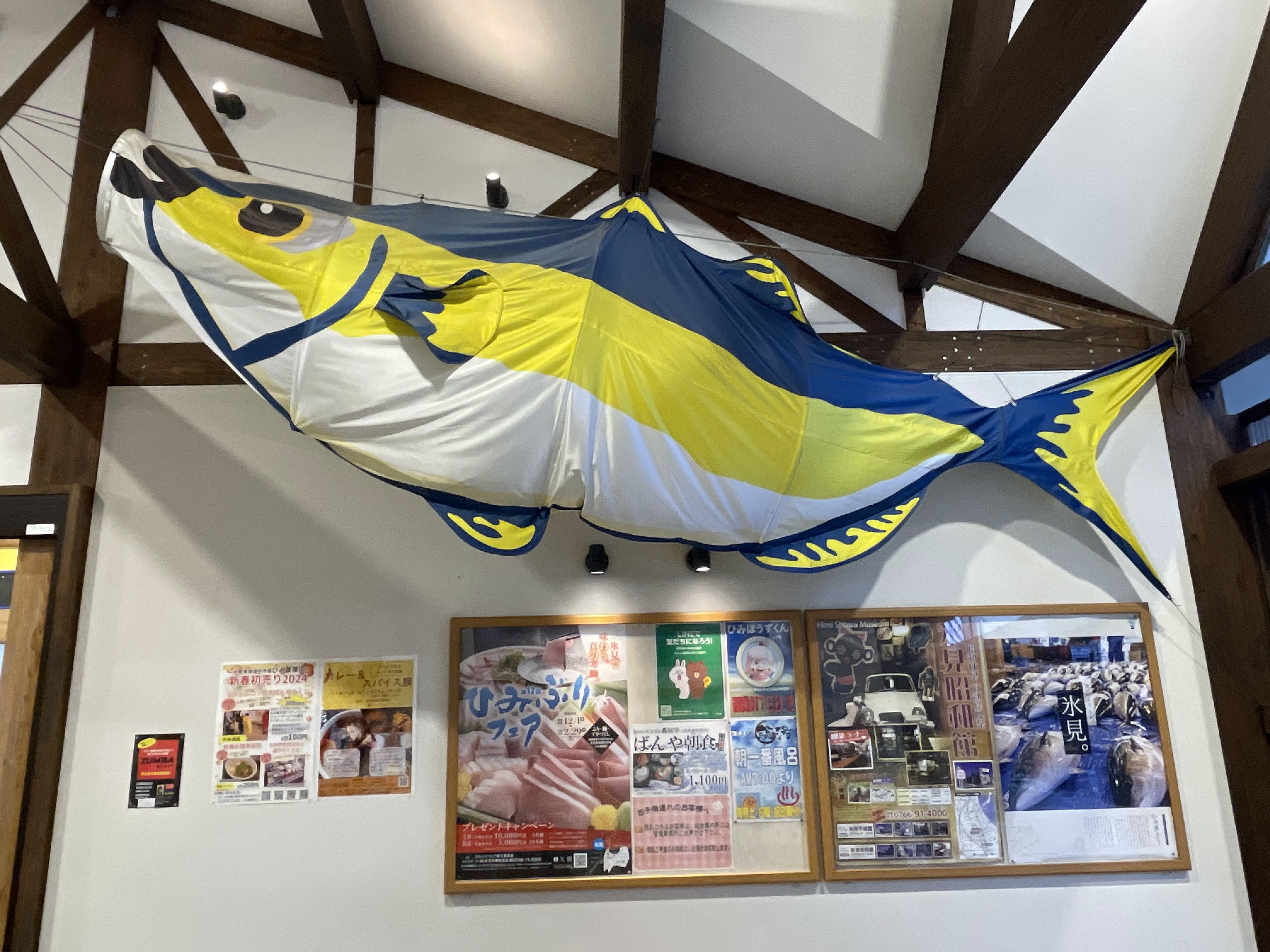
Last two stops before we headed out were the Himi City Fisheries Cultural Exchange Center and the Himi roadside station. The exchange center looks quite grand and new. On the day we visited, there only two or 3 other couples inside, so we had a lot of the place to ourselves. 

It's quite open inside and comfortable with lots of different displays, including some fun activities like this interactive one which is to match the stuffed fish with the name. It even beeped or chimed to indicate if you got it wrong or right!
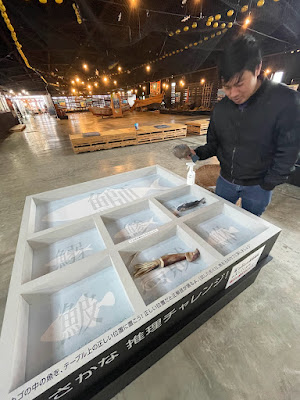
There were also displays and different explanations about the special technique used to catch the fish which stresses them out less than other methods (resulting in tastier fish!).

The roadside station was split into several smaller buildings and mostly contained small individual vendors, many of which were selling fresh fish or other seafood available to be shipped. 

In the grocery store at the end, I ended up buying this chocolate bar that was in a fridge box and it was legitmately so good lol. (Seemingly nothing to do with the local area, but I really enjoyed it.)

We closed off our trip by doing the 1.5 hour drive back to Komatsu Airport from Himi, returning our rental car and hanging out at the airport until take off - 1 hour back to Haneda!

While we didn't get to fully exhaust each prefecture we visited, I am happy with what we were able to accomplish with 3 days with first and last including transit travel as well. We got to try regional specialties (sauce katsu don, habutae mochi, nanakoshi, kan-buri) and some local chains as well (Hachiban Ramen, Champion Curry). It's great to finally check off the Giant Squid statue from my Japan bucket list!


Wednesday, December 20, 2023

Hokuriku trip - Ishikawa: 21st Century MoCA, Kenrokuen, Noto Squid King, Wajima Kiriko Art Museum, Shiroyone Senmaida Rice Terraces

We chose to make Kanazawa our base for the trip, so we spent the most of our time in Ishikawa prefecture. We stayed at the Hotel Resol Trinity Kanazawa which is closely located to Omicho Market, but not so close to Kanazawa station (which was fine for us with a car).  

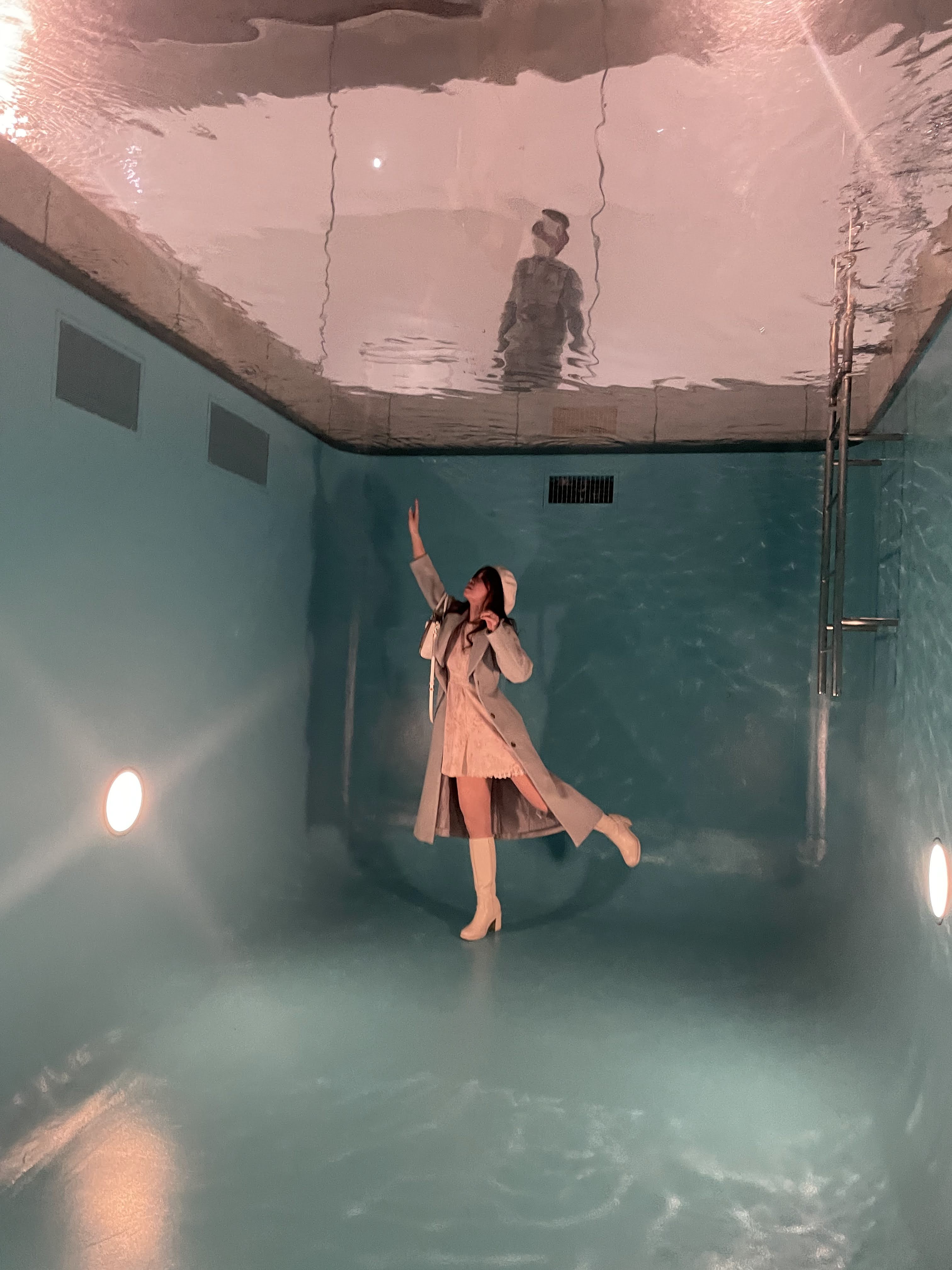
After leaving Fukui, we drove straight to the 21st Century Museum of Contemporary Art. It was already a bit late in the day and quite dark out when we arrived around 18:30, but luckily it's open until 20:00 on Fridays and Saturdays. We decided to get the tickets for admission to both exhibitions for 1200yen. Luckily, I had snagged us a spot to get into the swimming pool exhibit right when we arrived, and it was time to queue once we had got our entrance tickets. 

There were instructions that said you only have 5 minutes once you enter and not to use video. There was a group in front of us that was definitely not following these rules and a line formed on the interior hallway. Because of this, we definitely wanted to be quick when it was our turn and probably didn't get the best pictures lol. 
Night time lighting probably didn't help lol. But it was an interesting start to our visit!

With the dual admission ticket, you can also check out the topside of the pool which is enclosed by museum walls, but open to the elements overhead. 

We took our time exploring the other areas of the museum. Most of the exhibits were related to sound, some had AI, VR or interactive aspects and, of course, most are best experienced in person. There was a museum staff next to most exhibits (and a lot of them looked a bit unhappy, taihen), so it did make taking pictures sometimes feel a little awkward. 

Felt more comfortable in this space because the artist specifically requested photos to be posted on IG with a @tomikono_wig tag (which I did!) 

Outside the museum, accessible at any time, are the large sculpture pieces that are constants/don't seem to rotate with the exhibitions inside which make them seem more iconic in a way.
There are definitely parts of the museum that would have been best experienced during the day/with daylight, but I also feel like it's really interesting to be in an art museum after dark as well so I was happy that the extended hours on Satuday allowed us to see the space in a different light. 

We had a full first day of our trip and didn't settle into the hotel and start looking for dinner until after 20:30. We briefly walked through Omicho Market, but as expected, most restaurants were already closed. We ended up grabbing dinner from iL-Chianti, the Italian restuarant connected to our hotel. The food was actually quite good, and I really enjoyed the garlic toast which is sometimes hit or miss in Japan. 

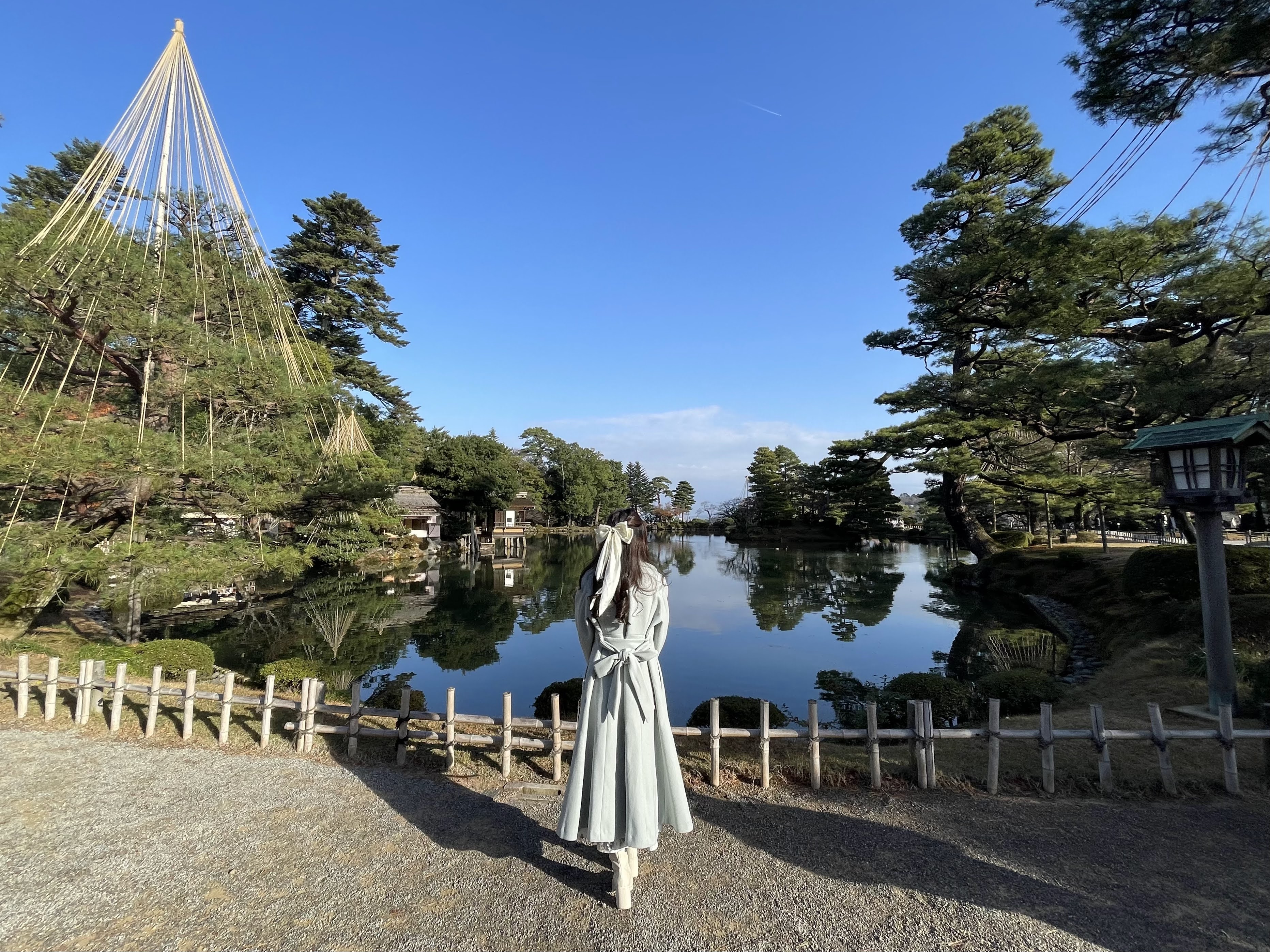
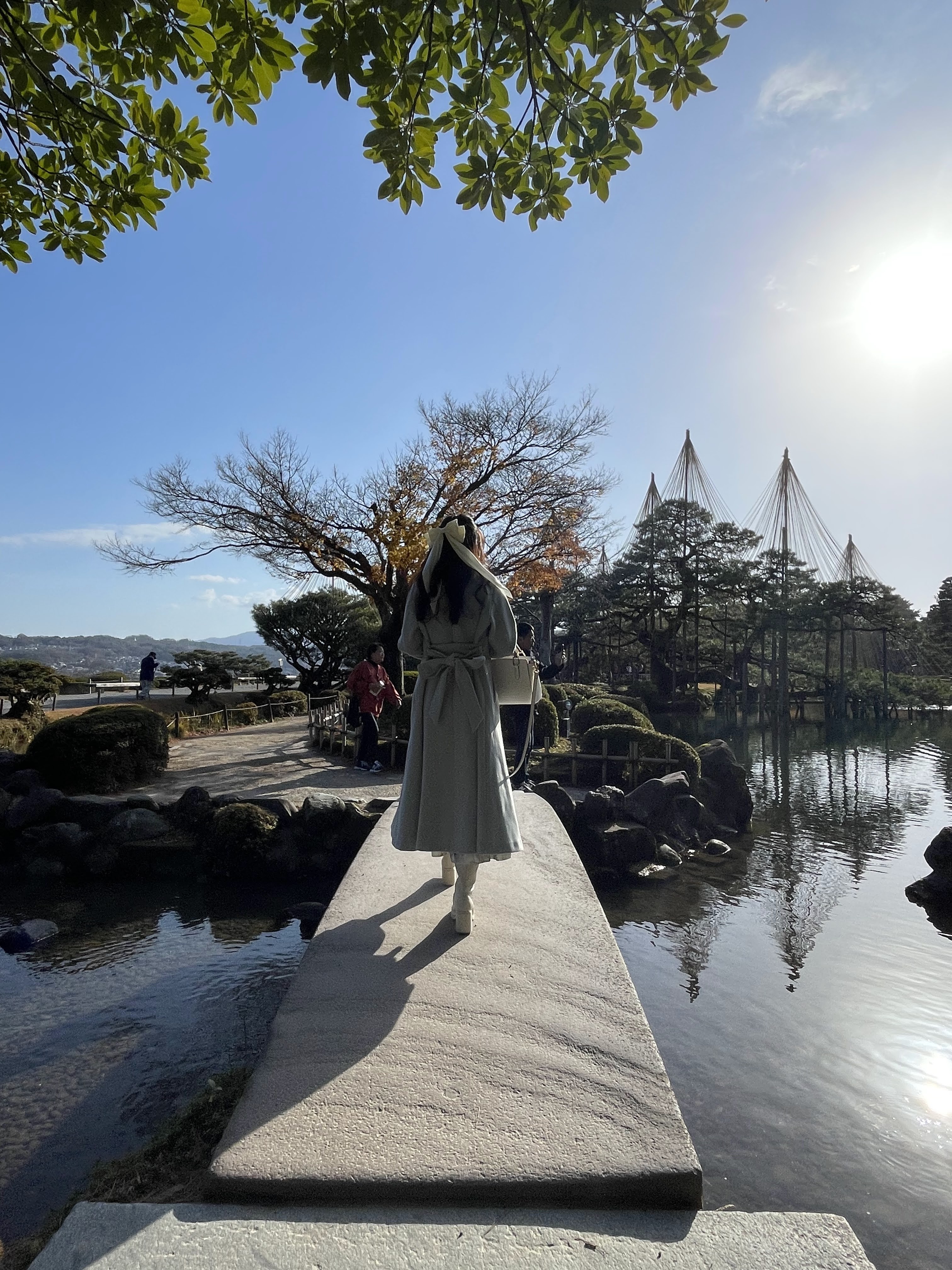
We began the second day of the trip by driving over to Kenrokuen. We chose a nearby coin lot near the Sakuragaoka entrance, but I think there might be a parking lot for the park if you follow the signs. 

It was a beautiful clear day with a nice blue sky. Even though it was a few degrees warmer than the forecast, I was happy to see the sun since rain was expected later in the day.

We arrived at the garden just after 0900 on a Sunday in early December and there were lots of other people around, but it didn't feel too crowded. We waited a little bit every once in a while to get a better picture, but for the most part were able to just stay to ourselves. I'm sure it's a lot different when it's not a transition between the seasons. 
We were able to take our time and visit both pond areas in a little bit over an hour (even taking a small snack and drink break). This garden is definitely worth a visit, but I would recommend trying to catch it at its peak at any one of the seasons (it's supposed to be designed to be beautiful in all of them!). We didn't quite have many autumn colors yet but also weren't catching any of the snowy wonderlandness either. It was still really nice, but I can easily see it could be better!

We started making our way to Noto Peninsula and I wanted to check out the Chirihama Beach Drive Way along the route. It's a stretch of beach with hard packed sand that you're able to drive on which seemed like a cool experience. There were lots of signs along the expressway to help make sure you get off at the right place if you want to check it out.

Unfortunately, it was closed on the day we tried to go! I had tried to do as much research as possible beforehand and didn't even realize this was a possibility, but I guess when the weather is a little stormy (and you can see the sky really turned grey after we left the garden), they don't allow access.

My husband went out to quickly check out the sand and beach area while I kept my boots sand-free lol. 

No beach drive, but we were able to quickly get back on the expressway and continue on our way. We stopped for a quick ramen lunch at the Noto location for Hachiban Ramen which is a chain in the Hokuriko area with an iconic 8 stamped naruto. 
My husband got the recommend set with vegetable ramen with butter broth and really enjoyed it!

Two hours of driving later, we finally arrive at the impetus for the whole trip. Ika no eki tsukumo-ru's giant squid statue!

Bigger and even better in person.
There were a few people around, but like for the One Piece statues, it wasn't too long to wait our turn if we wanted a stranger-free photo but it was also good to have the opportunity to have someone take a picture of both of us quickly as well. 

The roadside station also has some informational displays about squid fishing (in Japanese lol) and a bunch of Noto things to buy as well as a small sit down restaurant.

The squid statue was really all we came to Noto for, but my husband was searching around on Google Maps and we started driving towards Wajima. We stopped on the side of the road quickly when we saw this torii gate in the water and a monument, because why not lol. 
According to the Google reviews, the stone is a monument to Gojingo Taiko who helped drive away the Uesugi forces who had advanced on the area. There is also a shrine up the hill 奥津姫神社(白山神社).

We drove a bit further to make it to my husband's spontaneous choice - Shiroyone Senmaida Rice Terraces which is right next to the Senmaida Pocket Park roadside station for convenience parking. 
In contrast from the clear blue sky in the morning at Kenrokuen, it was now grey and overcast and super windy in this area near the water! We opted to stay at the top, but there are several walking paths down and around the rice field. This is a bit of an off season for it where the rice isn't green and growing nor is there water, but it was still a really interesting layout. In the winter, they do illumination for the field, but it wouldn't start until 2 hours later (17:00 in December). 

While in Wajima, the other major thing to do is visit the morning market, but the right time of day had long since passed. With our unplanned visit to this area and it being a bit late already, we decided to check out the Wajima Kiriko Art Museum. 

There is a nice parking lot next to the building and it's very easy to find/access. Admission is 630yen per adult. 

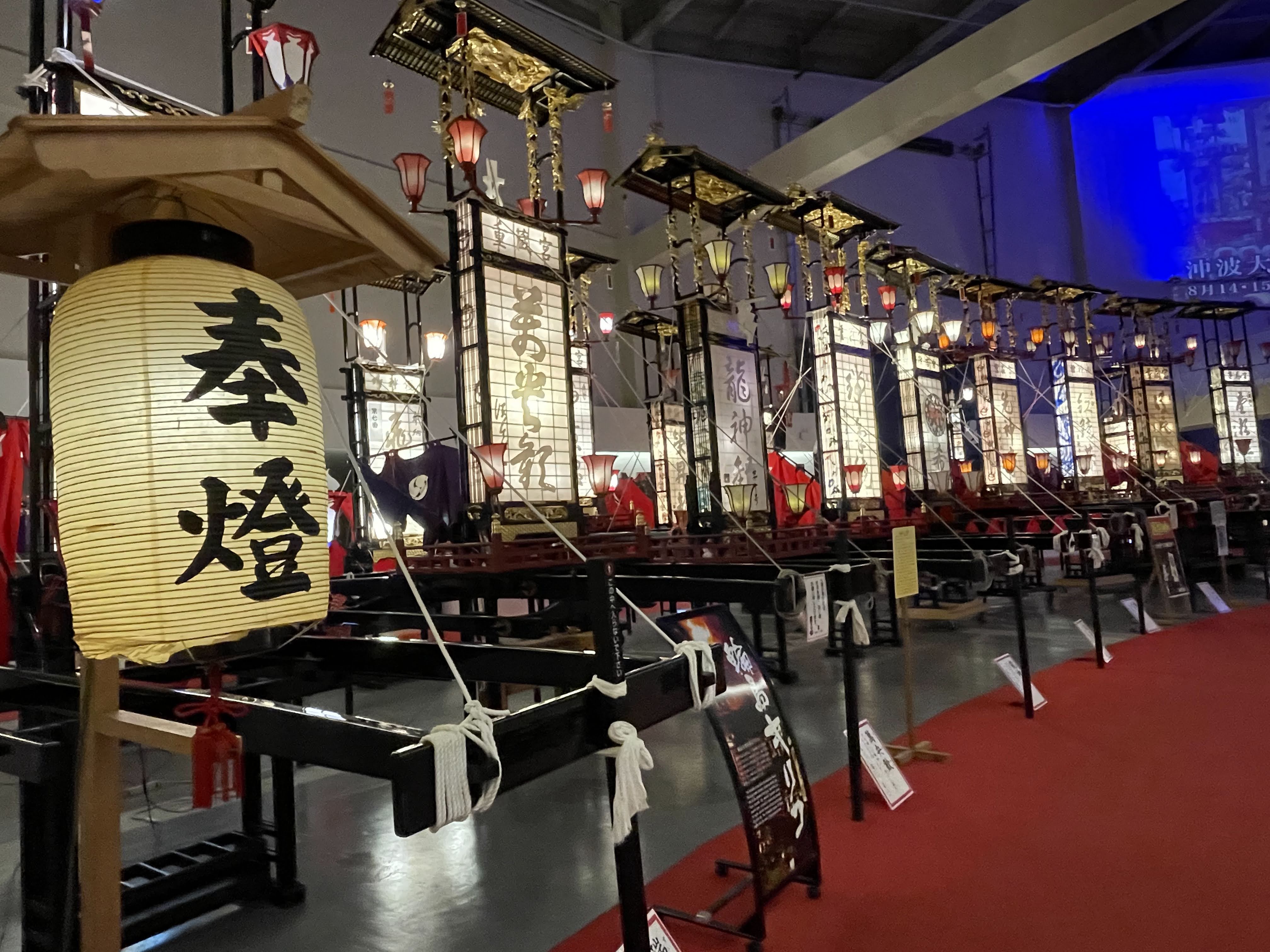
A museum staff walked us through the first area. He was able to simplify some of his explanations in Japanese or use a translation app to introduce the kiriko and their use in the different summer festivals in this area for us. These are actually used during the festival and a large door will open to take them in and out. 

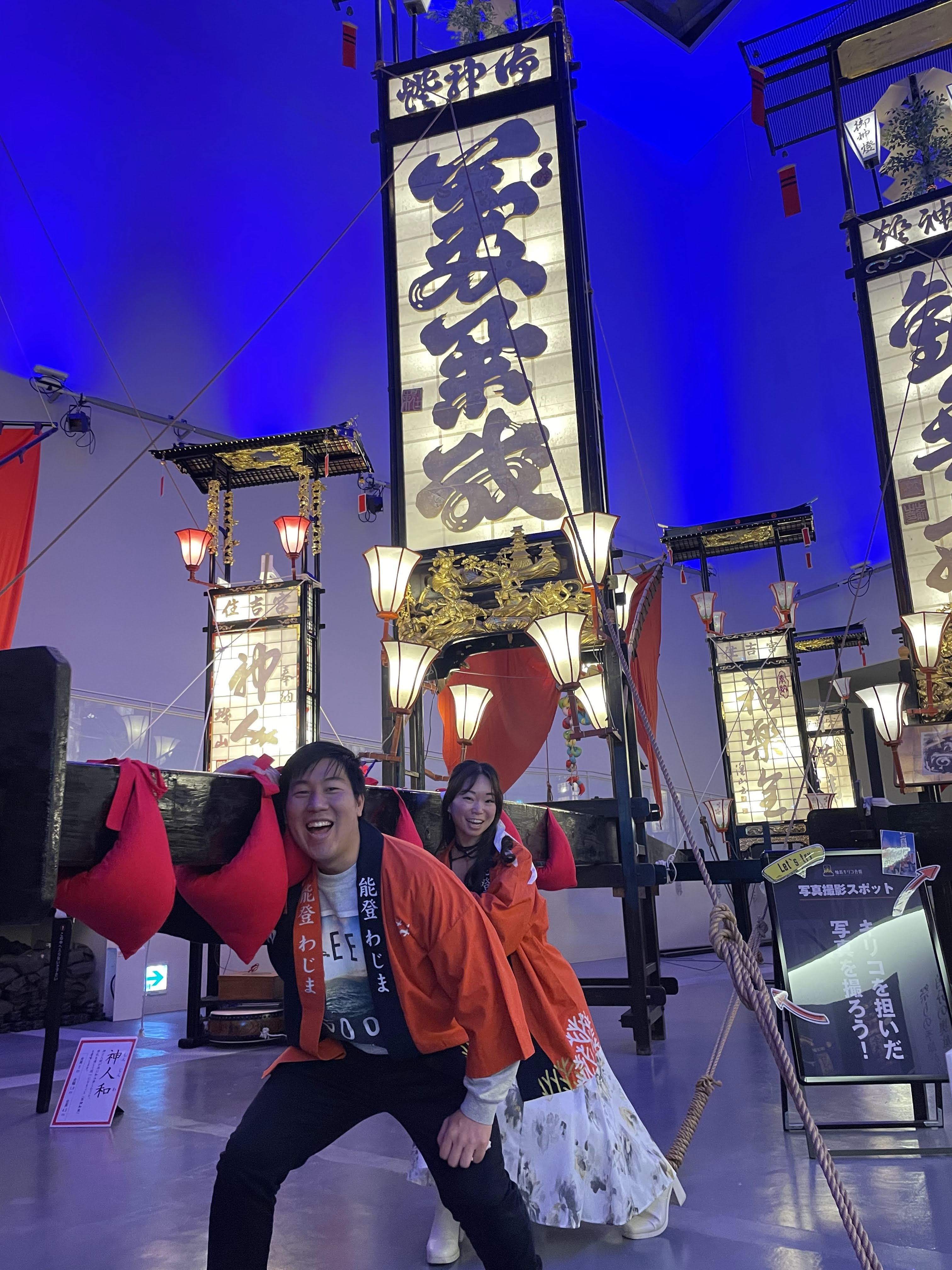
Photo op area with the happi coats and EXTRA LARGE kiriko. He helped us pose haha. 

After that, he gave us some time to explore the rest of the museum on our own. There is an information video that plays on a loop on a large projector and 2 other floors to allow different views. The gold detailing on the kiriko is really intricate. I especially liked the dragons!

We spent just enough time at the Kiriko Art Museum for the sun to mostly set and arrive back at the rice terraces for the light up! It was actually already started before 17:00 which was great for us. 

This is another activity that's best in person, especially because photos were a bit difficult once all the natural light was gone!

We decided to actually walk down into the terraced area this time and just followed the lighted path. Still felt super safe and easy although there were portions that were super steep depending on which way you went. 

From what we could tell, the color changed every 20 minutes or so and it would be gradual until everything was the new color. 
We stayed from about 16:50 - 17:30 and were able to see pink, green, yellow and blue! It was definitely worthwhile to drive back to see this winter variation. I would love to see it during peak rice season though!

The roads were dark and windy as my husband drove the 2 hours back to Kanazawa. We stopped for Champion Curry along the way for a quick dinner from this regional chain. Lots of rice sitting under the curry. I would recommend the chicken katsu curry!

While in Ishikawa, I had anticipated us spending a few more meals in Kanazawa and especially eating once if not twice in Omicho Market (which is why we booked a hotel in proximity to it), but because of our timing and prioritizing other activities, we never made it while most of the restaurants were open! Despite that, we still had a really good time in this prefecture, and I have no regrets about spending more time in Noto instead, especially checking out Wajima and the rice terraces. If we ever visit Kanazawa again, I'm sure we'll make it to Omicho Market, but probably won't go all the way out to the peninsula. I was sad we couldn't do the Chirihama Beach Driveway which really wouldn't have taken any additional time our of our schedule, but if that's the one bummer, I'll take it. 

Next up is our final day of our short little trip in Toyama :)


Hokuriku 3-day trip